
Indian Institute of Mass Communication (IIMC), New Delhi: Courses, Admission, Fees, Placements and Campus Details

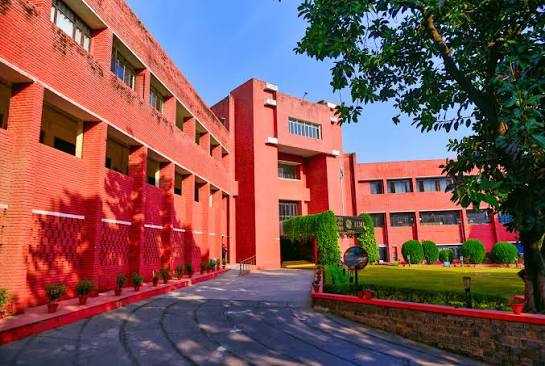
Indian Institute of Mass Communication (IIMC), New Delhi: Courses, Admission, Fees, Placements and Campus Details
Introduction
The Indian Institute of Mass Communication (IIMC), New Delhi, is one of India's well-known institutions for education and professional training in journalism, mass communication, advertising, public relations and digital media. Established under the Ministry of Information and Broadcasting, Government of India, the institute focuses on developing skilled media professionals through academic learning, practical training and industry exposure.
IIMC received Deemed to be University status on 31 January 2024, enabling it to award postgraduate and doctoral degrees. Its headquarters is located at the New JNU Campus, Aruna Asaf Ali Marg, New Delhi. The institute also operates five regional campuses across India.
IIMC New Delhi Highlights
| Particulars | Details |
|---|---|
| Institute Name | Indian Institute of Mass Communication |
| Popular Name | IIMC New Delhi |
| Established | 17 August 1965 |
| Institution Type | Deemed to be University |
| Established Under | Ministry of Information and Broadcasting, Government of India |
| Main Campus | New Delhi |
| Regional Campuses | Dhenkanal, Aizawl, Amravati, Jammu and Kottayam |
| Major Courses | MA, PG Diploma and PhD |
| Admission Basis | CUET-PG and institute-level entrance examination for specified programmes |
| Popular Fields | Journalism, Advertising, Public Relations and Digital Media |
| Official Website | https://www.iimc.gov.in/ |
History of IIMC New Delhi
The Indian Institute of Mass Communication was established on 17 August 1965 with the objective of providing professional education and training in journalism and mass communication. It was created to strengthen media education, research and communication practices in India.
Over the years, IIMC expanded its academic activities and established regional campuses to provide media training in different parts of the country. Its programmes cover print journalism, electronic media, advertising, public relations and emerging communication technologies.
On 31 January 2024, the Ministry of Education granted IIMC Deemed to be University status under the distinct category, following the recommendation of the University Grants Commission. This development allowed the institute to introduce degree programmes and doctoral research.
Campus and Infrastructure
The main campus of IIMC is situated at the New JNU Campus on Aruna Asaf Ali Marg in New Delhi. It provides academic and practical facilities designed for students interested in journalism and communication-related careers.
Important facilities include:
Specialised Library: The institute's library has more than 40,000 books and journal titles related to mass communication and allied subjects.
Television and Sound Studios: Students receive practical exposure to television production, sound recording and editing.
Computer Laboratories: Computer labs support digital publishing, graphic design, editing and other media-related activities.
Photography Equipment: Students can work with professional cameras and related equipment.
Auditoriums: The campus includes Mahatma Gandhi Manch, Lokmanya Bal Gangadhar Tilak Mini Auditorium and Meghdoot Amphitheatre.
Seminar Halls: These spaces are used for academic discussions, conferences, guest lectures and industry interactions.
Sports Facilities: Students can access facilities for badminton, volleyball and table tennis.
Hostel Facilities: Limited hostel accommodation is available. Allotment depends on availability and institute rules.
Wellness Centre: Medical consultation, psychological support and yoga activities are available.
The institute also organises workshops, seminars, practical assignments and interactions with media professionals to strengthen students' professional skills.
Courses Offered at IIMC New Delhi
IIMC offers postgraduate degree programmes, postgraduate diploma programmes and doctoral research opportunities. The courses available at the New Delhi campus for the 2026–27 academic session include the following.
1. Postgraduate Degree Programmes
| Course | Duration | Seats at New Delhi Campus |
|---|---|---|
| MA in Media Business Studies | 2 Years | 40 |
| MA in New Media Communications | 2 Years | 30 |
| MA in Strategic Communication | 2 Years | 40 |
| MA in Health Communication | 2 Years | 40 |
The institute also offers MA in Media and Communication Governance and MA in Corporate Communication and Brand Management at its Dhenkanal campus.
MA in Media Business Studies: This programme focuses on media organisations, business management, marketing, finance, strategy and the changing media industry.
MA in New Media Communications: Students study digital storytelling, social media, media analytics, content development, digital platforms and emerging media technologies.
MA in Strategic Communication: The course develops skills in communication planning, public campaigns, strategic messaging and professional communication.
MA in Health Communication: This programme focuses on communication strategies for public health awareness, healthcare campaigns and health-related information management.
2. Postgraduate Diploma Programmes
| Course | Duration | Seats at New Delhi Campus |
|---|---|---|
| PG Diploma in Journalism (English) | 1 Year | 68 |
| PG Diploma in Journalism (Hindi) | 1 Year | 68 |
| PG Diploma in Radio and Television Journalism | 1 Year | 51 |
| PG Diploma in Advertising and Public Relations | 1 Year | 77 |
| PG Diploma in Journalism (Urdu) | 1 Year | 30 |
IIMC also offers language-specific journalism diploma programmes in Malayalam, Marathi and Odia at its respective regional campuses.
3. PhD Programme
IIMC offers a PhD programme for candidates interested in advanced research in journalism, media studies and mass communication. Research areas may include media policy, digital communication, journalism, public relations, advertising and communication strategies.
Candidates should check the latest PhD admission notification for eligibility, research areas, entrance requirements and available seats.
IIMC New Delhi Admission Process 2026–27
Admission to IIMC's postgraduate programmes is based on the entrance examination and counselling process prescribed for the respective course.
For the 2026–27 academic session, the institute used the Common University Entrance Test for Postgraduate programmes (CUET-PG), conducted by the National Testing Agency, for the relevant MA and PG Diploma programmes.
The general admission process is:
Visit the official IIMC website and read the latest admission prospectus.
Apply for the relevant CUET-PG paper through the NTA portal, wherever applicable.
Appear for the entrance examination.
Check the result and follow IIMC's admission notifications.
Register for online counselling through the IIMC admission portal.
Select the preferred programme and campus.
Check the seat allotment result.
Pay the prescribed admission fee within the deadline.
Complete document verification and institute registration.
Admissions to language-specific journalism programmes may follow a separate entrance examination conducted by IIMC.
Admission update: The 2026–27 admission process has already progressed through counselling and seat-allotment rounds. Students planning to apply in the next academic session should check the new admission notification rather than rely on previous-year dates.
Eligibility Criteria
The eligibility requirements depend on the programme.
MA Programmes
Applicants must hold a bachelor's degree from a recognised university.
A minimum of 55% marks is required under the 2026–27 admission notice.
Final-year undergraduate students may also apply, subject to the institute's result-submission requirements.
There is no age limit for the MA programmes under the 2026–27 admission notice.
PG Diploma Programmes
Candidates must have a bachelor's degree in any discipline from a recognised university.
Final-year undergraduate students may apply subject to the prescribed conditions.
Age limits apply to specified PG Diploma categories. For the 2026–27 session, the age rules differed for General, OBC and SC/ST/PwD candidates.
Applicants should check the current prospectus for category-wise relaxation, age criteria and programme-specific entrance requirements.
Seat Intake at IIMC New Delhi
The institute's 2026–27 prospectus specifies the following intake for its New Delhi campus:
| Programme | Seats |
|---|---|
| MA in Media Business Studies | 40 |
| MA in New Media Communications | 30 |
| MA in Strategic Communication | 40 |
| MA in Health Communication | 40 |
| PG Diploma in Journalism (English) | 68 |
| PG Diploma in Journalism (Hindi) | 68 |
| PG Diploma in Radio and Television Journalism | 51 |
| PG Diploma in Advertising and Public Relations | 77 |
| PG Diploma in Journalism (Urdu) | 30 |
Seat availability and reservation are subject to the official prospectus and admission notifications for the relevant academic year.
IIMC New Delhi Fee Structure 2026–27
The institute publishes a semester-wise fee structure in its admission prospectus. The following totals are calculated by adding the prescribed semester fees for the respective programmes.
| Programme | Semester-wise Fee | Approx. Total Programme Fee |
|---|---|---|
| MA in Media Business Studies | ₹79,000 + ₹66,000 + ₹71,000 + ₹66,000 | ₹2,82,000 |
| MA in Strategic Communication | ₹79,000 + ₹66,000 + ₹71,000 + ₹66,000 | ₹2,82,000 |
| MA in Health Communication | ₹79,000 + ₹66,000 + ₹71,000 + ₹66,000 | ₹2,82,000 |
| MA in New Media Communications | ₹94,000 + ₹81,000 + ₹86,000 + ₹81,000 | ₹3,42,000 |
| PG Diploma in Journalism (English) | ₹64,000 + ₹51,000 | ₹1,15,000 |
| PG Diploma in Journalism (Hindi) | ₹64,000 + ₹51,000 | ₹1,15,000 |
| PG Diploma in Advertising and Public Relations | ₹79,000 + ₹66,000 | ₹1,45,000 |
| PG Diploma in Radio and Television Journalism | ₹94,000 + ₹81,000 | ₹1,75,000 |
The above amounts are based on the 2026–27 prospectus. Hostel, food, travel and other personal expenses may be additional. Students should verify the applicable fee and payment instructions before admission.
Scholarships at IIMC New Delhi
IIMC provides scholarship opportunities to support eligible students. The schemes listed in the prospectus include:
1. Vidya Sanjeevani Scholarship Scheme (VSSS)
The scheme provides a tuition-fee waiver based on income and academic merit. The prospectus describes coverage of up to 10% of admitted candidates in each programme, subject to eligibility and qualifying conditions.
2. National Scholarships
Eligible students can explore scholarships available through the National Scholarship Portal, subject to the applicable government rules.
3. Special Scholarships
The institute lists specific scholarships for eligible students in selected programmes, including Hindi Journalism, Radio and Television Journalism, and Advertising and Public Relations.
Scholarship availability, amounts and conditions may change between academic sessions. Students should consult the latest scholarship notice.
Placements at IIMC New Delhi
IIMC focuses on practical media training and industry exposure. The institute organises a placement and internship fortnight towards the end of the academic session, giving students an opportunity to interact with media organisations and communication companies.
Recruiters and organisations listed in the institute's recent placement prospectus include:
Prasar Bharati
Hindustan Times
Zee Media
Network18
India TV
ANI
ABP News
NDTV
The Times Group
Business Standard
Inshorts
Edelman
Accenture
MSL India
Ruder Finn
Exchange4Media
Dainik Jagran
Economic Times
Career Opportunities
After completing a programme at IIMC, students may explore roles such as:
Reporter or News Correspondent
News Anchor
Video Journalist
Content Writer
Digital Media Executive
Public Relations Executive
Advertising Professional
Corporate Communication Executive
Social Media Manager
Media Researcher
Radio and Television Production Professional
Placement note: IIMC facilitates placement and internship interactions, but its prospectus clearly states that the institute does not guarantee employment. A verified current average package or placement percentage should not be assumed from the recruiter list.
Research and Industry Exposure
Research is an important part of IIMC's academic activities. The institute works on media research, communication strategies, government campaigns, public awareness and the impact of information programmes.
Students also benefit from:
Guest lectures by media professionals.
Workshops and practical media assignments.
Journalism and communication seminars.
Industry interactions and institutional visits.
Research publications and academic discussions.
Training in television, audio and digital media production.
These activities help students understand the professional requirements of the media and communication sector.
Accreditation and Recognition
IIMC received Deemed to be University status under the distinct category on 31 January 2024, through the Ministry of Education, Government of India, following UGC recommendations.
This recognition allows the institute to award postgraduate and doctoral degrees. IIMC is also an institution under the Ministry of Information and Broadcasting and serves as a training academy for Indian Information Service officers.
The institute's 2026–27 prospectus also cites its recognition in media-institute surveys, including India Today-MDRA and The Week-Hansa. Such survey recognition should be distinguished from government ranking frameworks such as NIRF.
Documents Required for Admission
Candidates should keep the following documents ready for the admission and verification process:
Class 10 marksheet and certificate.
Class 12 marksheet and certificate.
Graduation marksheets.
Graduation degree or provisional certificate, where applicable.
CUET-PG scorecard, wherever required.
Valid photo identity proof.
Recent passport-size photographs.
Category certificate, if applicable.
EWS certificate, if applicable.
PwD certificate, if applicable.
Admission allotment letter.
Fee payment receipt.
The institute may ask for additional documents during counselling or final verification.
How to Reach IIMC New Delhi
IIMC is located at the New JNU Campus on Aruna Asaf Ali Marg, New Delhi.
By Metro: Students can use the Delhi Metro network and continue by local transport to the campus.
By Bus: Public buses and local transport connect different parts of Delhi with the Vasant Kunj and JNU area.
By Train: New Delhi Railway Station and other major railway stations are connected to the campus by metro, taxi and bus services.
By Air: Indira Gandhi International Airport is the nearest major airport.
Students should check the latest local transport routes before travelling.
Contact Details of IIMC New Delhi
| Particulars | Details |
|---|---|
| Institute | Indian Institute of Mass Communication |
| Address | New JNU Campus, Aruna Asaf Ali Marg, New Delhi – 110067 |
| Official Website | https://www.iimc.gov.in/ |
| Telephone | 011-26741537, 26742920, 26741987 |
| Fax | 011-26742462 |
| contact@iimc.gov.in | |
| Admission Email | admissions@iimc.gov.in |
Why Choose IIMC New Delhi?
IIMC is a suitable option for students who want to build careers in journalism, advertising, public relations, digital media and strategic communication.
Some important reasons to consider the institute are:
Established institution with a long history of media education.
Deemed to be University status.
Specialised postgraduate programmes in communication and media.
Practical training through studios, computer labs and media equipment.
Industry interactions, internships and placement activities.
A specialised library and research facilities.
Scholarship opportunities for eligible students.
A network of alumni working in media organisations and communication-related fields.
Frequently Asked Questions (FAQs)
1. Is IIMC New Delhi a government or private institution?
IIMC is a government institution established under the Ministry of Information and Broadcasting, Government of India.
2. When was IIMC established?
The Indian Institute of Mass Communication was established on 17 August 1965.
3. Is IIMC a deemed university?
Yes. IIMC received Deemed to be University status under the distinct category on 31 January 2024.
4. Which courses are available at IIMC New Delhi?
The New Delhi campus offers MA programmes in Media Business Studies, New Media Communications, Strategic Communication and Health Communication. It also offers postgraduate diplomas in Journalism, Radio and Television Journalism, and Advertising and Public Relations.
5. What is the eligibility for MA admission at IIMC?
For the 2026–27 session, applicants needed a recognised bachelor's degree with at least 55% marks. Candidates should check the next session's prospectus for updated rules.
6. Does IIMC accept CUET-PG scores?
Yes. CUET-PG was used for the relevant MA and PG Diploma admissions in the 2026–27 session. Some language-specific journalism programmes follow a separate IIMC entrance process.
7. What is the total fee for an MA at IIMC New Delhi?
For 2026–27, the total published fee is approximately ₹2.82 lakh for MA in Media Business Studies, Strategic Communication and Health Communication, and ₹3.42 lakh for MA in New Media Communications.
8. Does IIMC provide hostel facilities?
Yes. Limited hostel accommodation is available, and allotment depends on availability and institute rules.
9. Does IIMC provide placement assistance?
Yes. The institute organises placement and internship interactions with media and communication organisations. However, it does not guarantee placement.
10. Where is IIMC New Delhi located?
The institute is located at the New JNU Campus, Aruna Asaf Ali Marg, New Delhi – 110067.
Conclusion
The Indian Institute of Mass Communication, New Delhi, is an established destination for students interested in journalism, digital media, advertising, public relations and communication studies. Its postgraduate programmes, practical media facilities, research activities and industry interactions provide opportunities to develop professional skills.
Students planning to apply should carefully review the latest admission prospectus, entrance examination requirements, programme availability, fee structure and scholarship conditions before completing the admission process.
Powered by Froala Editor